Why Is Gel Polish Not Curing Under a UV LED Nail Lamp?
Gel polish provides a flawless, durable manicure. However, encountering a soft, wrinkly, or smudged finish is highly frustrating. When gel polish fails to cure correctly under a UV LED nail lamp, the issue usually points to specific application or equipment factors. Understanding these variables prevents future manicure failures.
Many users think their gel polish remains uncured because the surface feels tacky. This sticky surface is actually the oxygen inhibition layer. It forms naturally when gel interacts with oxygen during curing. Wipe this layer off with isopropyl alcohol at the very end of your manicure. Never touch this tacky surface with bare skin to avoid severe allergic reactions.
Why Your Gel Polish Fails to Cure
- Polish and Equipment Incompatibility
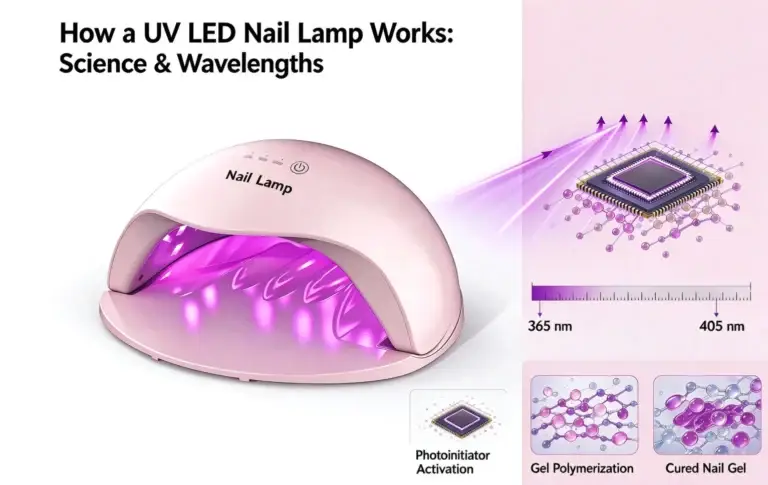
Not all gel polishes react to the same light frequencies. Traditional UV gels require broad-spectrum light (around 365nm). Modern LED gels cure rapidly under targeted wavelengths (typically 405nm). Using a legacy UV-only gel with a modern LED-only device means the polish will not harden. A dual-light UV LED nail lamp prevents this by emitting both required wavelengths.
- Applying Polish Too Thickly
Thick layers of gel polish block UV light from penetrating to the base. The top layer might harden, while the bottom remains liquid. This traps uncured gel against your nail plate, leading to peeling, bubbling, and potential skin allergies. Always apply paper-thin coats. Cure each layer individually to ensure complete structural stability.
- Incorrect Hand Placement
Light travels in straight lines. If fingers tilt downward or users curl their thumbs, the light cannot hit the gel polish evenly. Ensure hands lie completely flat inside the chamber. Many professionals choose to cure thumbs separately. This simple adjustment guarantees maximum light exposure from the top-down diodes and prevents side-pooling.
- Equipment Deterioration
Nail lamps degrade over time. Even if the lights turn on, the intensity of the UV diodes drops after thousands of hours of use. Dust or cured gel residue covering the bulbs will also block light emission. Clean your equipment regularly. Replace aging lamps that no longer deliver their original wattage output to maintain consistent curing results.
- Incorrect Curing Times
Every gel product contains specific photoinitiators requiring an exact curing time. Base coats, color layers, and top coats often need different durations. Guessing the time leads to under-cured polish. Always consult the gel manufacturer’s instructions. Match the curing time to your specific lamp’s wattage output for the best results.
Step-by-Step Troubleshooting Checklist
✅️Verify your polish type matches your lamp’s wavelength specifications (365nm/405nm).
✅️Clean the interior of your lamp and inspect all diodes for physical damage.
✅️Apply thinner layers of color gel rather than one thick coat.
✅️Position hands completely flat inside the device to avoid light blind spots.
✅️Follow the exact curing times listed on the gel polish bottle.
✅️Wipe the sticky inhibition layer on the final top coat with alcohol.
Summary
Achieving a flawless gel manicure requires precise application and reliable equipment. By applying thin coats, ensuring proper hand placement, and using a high-quality UV LED nail lamp, you eliminate the main causes of curing failures. Always follow manufacturer guidelines and maintain your tools to keep your nails beautiful and safe.
FAQ
-
Why does my gel polish feel sticky after curing?
The sticky residue is the oxygen inhibition layer. It forms naturally during the curing process when gel meets oxygen. Wipe it away with isopropyl alcohol after curing your final top coat. -
Can I over-cure my gel polish?
Yes, leaving gel polish under a lamp for too long can cause discoloration and brittleness. Over-curing destroys the flexible nature of the gel. Always follow the manufacturer’s recommended curing times. -
How long should I cure gel polish under a UV LED nail lamp?
Most LED-formulated gel polishes require 30 to 60 seconds per coat. Base coats typically need less time, while heavily pigmented colors or thick top coats require the full 60 seconds to fully harden. -
Does applying thick coats of gel polish speed up the manicure process?
No, applying thick coats prevents the UV light from reaching the bottom layer. This results in soft, bubbling, or peeling polish. Always apply thin, even layers for proper curing. -
When should I replace my nail lamp?
You should replace your device when you notice extended curing times or soft finishes despite proper application. High-quality UV LED lamps typically last for 30,000 to 50,000 hours of use.