How Long Does Gel Polish Take to Cure Under a Nail Lamp?
For salon owners and nail professionals, achieving a flawless, long-lasting manicure relies on one critical piece of equipment: the nail lamp. A common question among beginners and professionals alike is the exact time required to properly cure gel polish.
However, a fixed, universal curing time does not exist. The curing process depends on complex chemical reactions between the gel formula and the light emitted by your gel nail lamp. Understanding this science helps you prevent service breakdowns.
What Happens During the Curing Process?
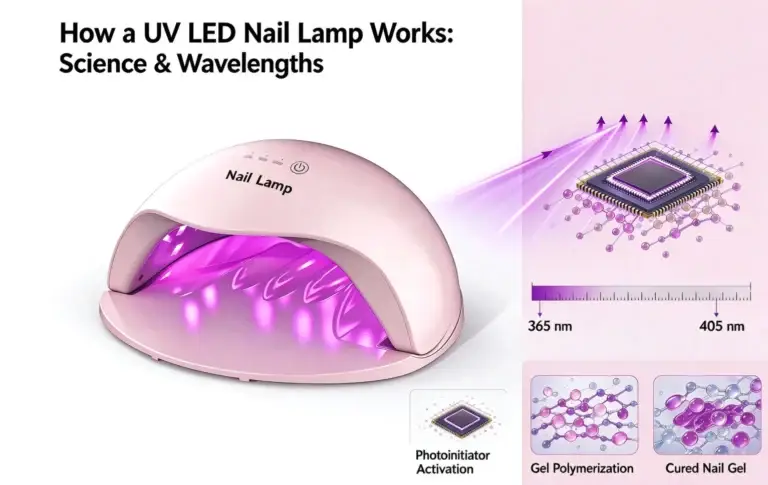
Gel polish does not dry in the air like traditional nail polish. Instead, it cures through a chemical process called polymerization. The gel formula contains specific molecules known as photoinitiators.
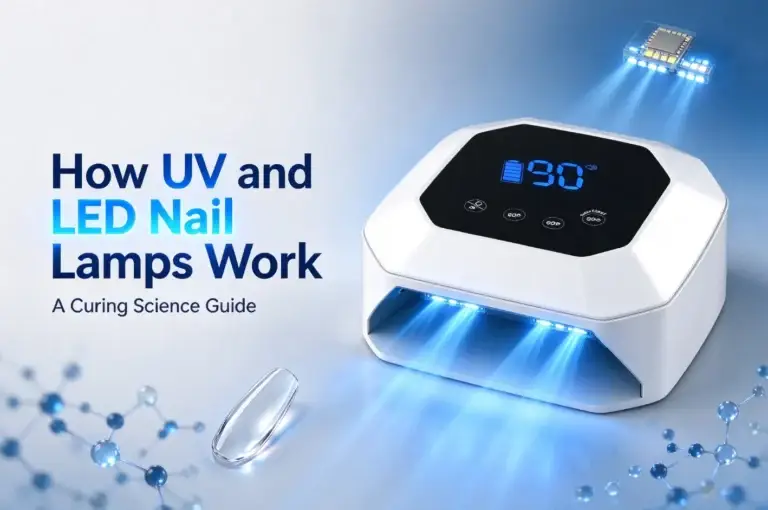
When these photoinitiators absorb UV or LED light from a nail lamp, they activate and link the liquid molecules together into a solid polymer network. This reaction requires the correct wavelength and adequate time to complete successfully.
If the reaction remains incomplete, the polish stays soft underneath, even if the top layer feels hard to the touch. This creates a false sense of security and often leads to premature peeling.
How a Gel Nail Lamp Determines Curing Time
The efficiency of a gel nail lamp directly dictates the required curing time. Manufacturers design their lamps to emit specific light properties that match their own chemical formulas.
-
Wavelength Matching: Photoinitiators require specific light wavelengths to activate, typically between 365nm and 405nm. If your lamp lacks the exact wavelength required by the gel, the polish will never fully cure.
-
Light Intensity: The wattage of a lamp only measures power consumption, not UV output. High-quality lamps deliver focused, intense light to the nail plate, ensuring deep penetration into the gel layers.
-
Diode Placement: A well-designed lamp features strategically placed light diodes. This ensures even coverage across all five fingers, including the thumb, preventing blind spots that cause uneven curing.
Key Factors Influencing Curing Times
Several variables affect how quickly and effectively your gel polish solidifies.
- Gel Polish Formula: Heavily pigmented colors, such as black or dark red, block light penetration. These shades often require more time to cure compared to clear base coats or sheer pinks.
- Application Thickness: Applying thick layers prevents the light from reaching the bottom of the polish. Always apply thin, even coats to ensure a proper cure and prevent wrinkling.
- Client Hand Placement: The client must place their hand flat and correctly inside the device. Tilted fingers or thumbs resting outside the main light zone will result in undercured areas.
Why You Cannot Use a Universal Timer
You might wonder why you cannot just set every lamp to 60 seconds and assume the job is done. Mixing different brands of gel polish and lamps represents a common industry mistake.
A lamp from Brand A might cure Brand A’s polish perfectly in 30 seconds. However, that same lamp might only partially cure Brand B’s polish, even after two minutes. You cannot guarantee a proper cure unless you use the specific lamp matched to your gel system.
Testing has shown that mismatched lamps can leave the lower layers of gel completely uncured. When you file off mismatched gel, it often comes off in spongy chunks rather than fine dust.
Recognizing Properly Cured vs. Undercured Gel
Nail technicians often struggle to identify undercured gel because the surface feels solid. Understanding the differences helps you troubleshoot application issues.
| Feature | Properly Cured Gel | Undercured Gel |
| Filing Texture | Turns into fine dust | Comes off in spongy chunks |
| Durability | Lasts weeks without chipping | Peels or lifts within days |
| Health Risk | Safe for natural nails | High risk of contact dermatitis |
The Hidden Risks of Undercuring
Failing to follow the manufacturer’s specified curing time leads to severe consequences for both the client and the salon’s reputation.
-
Service Breakdown: Undercured gel lacks durability. It will chip, peel, and lift quickly, leading to unhappy clients and lost revenue.
-
Allergic Reactions: Prolonged skin exposure to uncured liquid acrylates represents the leading cause of contact dermatitis in the nail industry.
-
Nail Damage: Soft, undercured gel traps moisture and creates an environment susceptible to bacterial growth.
Summary
To guarantee optimal performance from your gel nail lamp, always follow the specific instructions provided by the gel manufacturer.
Invest in professional-grade equipment, apply thin layers, and ensure proper hand placement. By understanding the science behind your tools, you deliver safer, longer-lasting manicures while protecting your business.
FAQ
-
Can you overcure gel polish under a nail lamp?
Yes, leaving gel polish under the light for too long can cause overcuring. This often leads to discoloration, brittleness, and a loss of shine. Always stick to the exact curing time recommended by the manufacturer. -
Does a higher wattage nail lamp cure gel faster?
No, wattage only measures the amount of electricity the lamp consumes, not the UV light output. A high-wattage lamp will not speed up the process if the light wavelengths do not match the gel formula. -
Why does my gel polish burn when curing?
A burning sensation, known as a heat spike, happens when the photoinitiators react too quickly and generate friction. You can prevent this by applying thinner coats of gel or using a lamp with a low-heat mode. -
Can I use any gel nail lamp for my polish?
No, you should use the lamp specifically tested and matched to your gel system. Different brands use different photoinitiators that require specific light wavelengths to fully polymerize. -
How do I know if my gel polish is fully cured?
You cannot visually confirm a full cure because the top layer will feel hard even if the bottom remains liquid. The only way to guarantee a proper cure is to use the correct lamp and follow the manufacturer’s required time.