What Is a UV LED Nail Lamp? Features and Benefits Explained
Professionals in the beauty and salon equipment industry often encounter various gel curing devices. A UV LED nail lamp stands out as the current standard for commercial and personal nail care. Understanding its true technical capabilities helps business owners, salon operators, and distributors make better purchasing decisions.
Many buyers confuse marketing terms with actual specifications. This article explains the exact features, light source configurations, and practical benefits of these devices. It will also help you identify the technical parameters that matter most during procurement.
What Is a UV LED Nail Lamp?
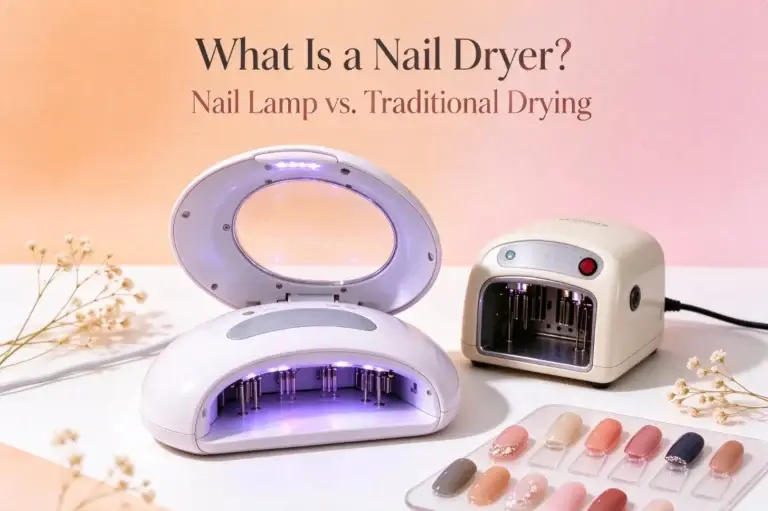
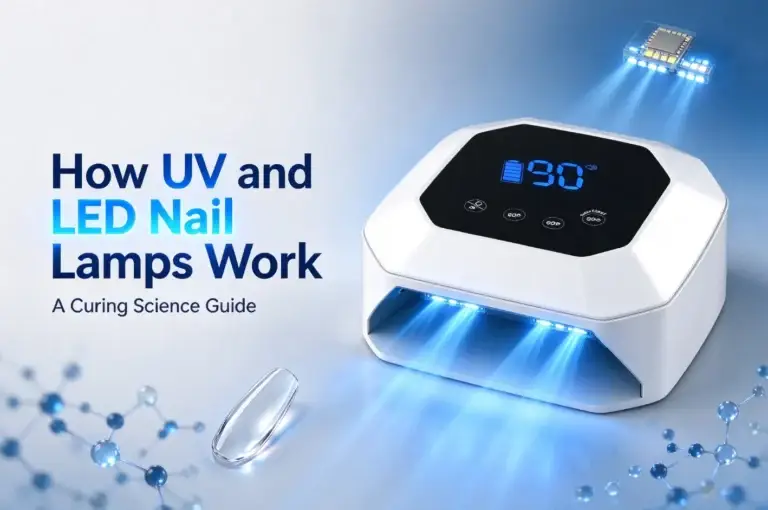
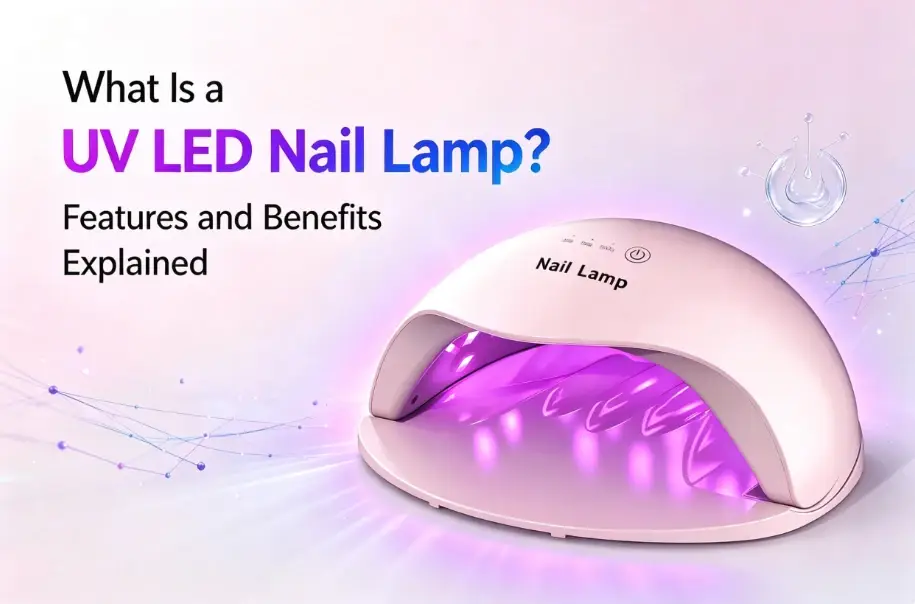
A UV LED nail lamp is an electronic curing device that uses light-emitting diodes to harden gel polish. Earlier generations relied entirely on fluorescent UV tubes. Today, manufacturers integrate LED technology to emit targeted ultraviolet light. This combination ensures faster curing times and broader compatibility with different gel formulas.
Brands frequently label their products with catchy terms to attract buyers. However, professionals must look past these names and focus on the technical data. A high wattage number on a box does not guarantee better performance. Instead, the irradiance and wavelength range determine the actual curing efficiency.
Core Features and Light Source Configuration
The performance of a UV LED nail lamp depends heavily on its internal architecture. Buyers should evaluate the light source configuration, structural design, and smart features before making a bulk purchase.
- Dual Wavelength Technology (365nm + 405nm)
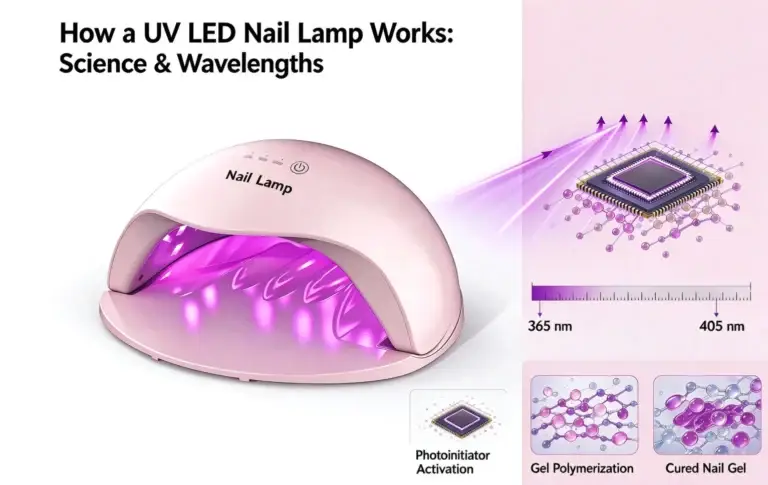
Modern devices typically feature a dual-wavelength spectrum. The 365nm wavelength effectively cures traditional UV gels and targets the deeper layers of the polish. Meanwhile, the 405nm LED wavelength quickly dries the surface and stabilizes the color. Checking the manufacturer’s testing data for this dual-range prevents you from investing in outdated single-spectrum lamps.
- Typical Structure and Diode Placement
The internal structure directly affects curing quality. Premium lamps feature multi-angle diode placement to eliminate dead zones. If a lamp exclusively places LEDs on the top ceiling, the sides of the nails might remain tacky. A mirrored, removable base plate also enhances light reflection and makes the unit suitable for pedicures.
- Timer Functions and Heat Control
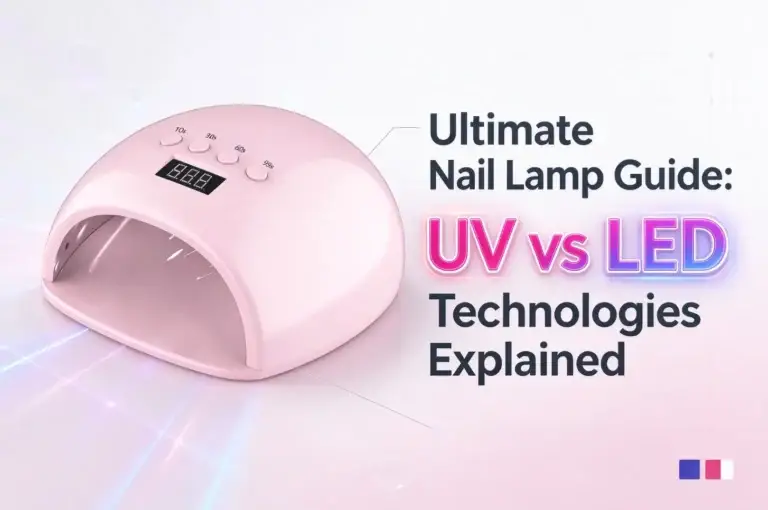
Most commercial units offer pre-set digital timers, usually spanning 10, 30, 60, and 90 seconds. Advanced models include a low heat mode. This feature gradually increases the power output over time. It prevents the uncomfortable heat spikes that clients frequently experience when curing thick builder gels.
- Smart Sensor Functionality
Infrared motion sensors provide hands-free operation. When a client inserts their hand, the sensor detects the movement and activates the diodes automatically. Removing the hand stops the curing process. This automation reduces physical wear on the buttons and streamlines the workflow for nail technicians.
The Benefits of Upgrading to Dual UV LED Systems
Investing in modern dual-spectrum devices brings measurable benefits to salon operators and beauty distributors.
-
Faster Processing: Curing times drop significantly. While older fluorescent models took two to three minutes, modern UV LED units finish the job in 30 to 60 seconds.
-
Extended Lifespan: High-quality LED beads can operate for tens of thousands of hours without needing replacement.
-
Energy Efficiency: These units consume less electricity than traditional fluorescent alternatives while generating less ambient heat.
-
Safety and Comfort: Targeted wavelengths reduce unnecessary skin exposure. The targeted light focuses specifically on the nail bed.
Procurement Checklist: What Buyers Must Verify
Treating all UV LED devices as identical products frequently leads to poor investment choices. Distributors and business owners should follow a strict evaluation process.
Use this checklist when reviewing supplier catalogs:
-
Request wavelength testing data (ensure it explicitly states 365nm and 405nm).
-
Check the diode count and internal placement angles.
-
Verify gel brand compatibility notes provided by the manufacturer.
-
Ask for irradiance measurements rather than just the nominal wattage rating.
-
Ensure the base is removable for easy sanitation and pedicure applications.
Summary
A UV LED nail lamp is a highly engineered tool designed to cure gel products rapidly and safely. By understanding the core features like dual-wavelength technology, smart sensors, and strategic diode placement, buyers can separate marketing hype from technical reality. Focusing on exact specifications ensures that professionals procure reliable equipment that meets the high demands of modern salons.
FAQ
-
Do UV LED nail lamps cure regular nail polish?
No. These devices emit specific light wavelengths designed to activate photoinitiators in gel polish. Regular nail polish dries through solvent evaporation and does not require light curing. -
What does 365nm and 405nm mean on a nail lamp?
These numbers represent the light wavelengths the lamp emits. The 365nm wavelength cures UV gels, while the 405nm wavelength targets LED gels. Having both ensures the lamp can cure a wider variety of professional gel products. -
Why do some clients feel a burning sensation under the lamp?
Thick gel applications can undergo a rapid chemical reaction when exposed to intense light, releasing heat. Using a lamp with a low heat mode slowly ramps up the power to prevent this discomfort. -
How long do the LED bulbs in these lamps last?
High-quality diodes in commercial models typically boast an operational lifespan of up to 50,000 hours. Unlike older fluorescent tubes, they rarely require replacement under normal commercial use. -
Does a higher wattage mean a better nail lamp?
Not necessarily. While higher wattage can indicate a stronger power draw, the actual curing efficiency depends on irradiance (how much light energy reaches the nail) and the specific placement of the diodes inside the dome.