How UV and LED Nail Lamps Work: A Curing Science Guide
For beauty equipment distributors and salon owners, understanding the science behind curing devices is crucial. Knowing how a UV nail lamp and an LED nail lamp work helps businesses select the right equipment, prevent product failure, and ensure client satisfaction. This guide breaks down the science of photopolymerization and equipment compatibility.
How Do Nail Lamps Trigger Photoinitiator Reactions?
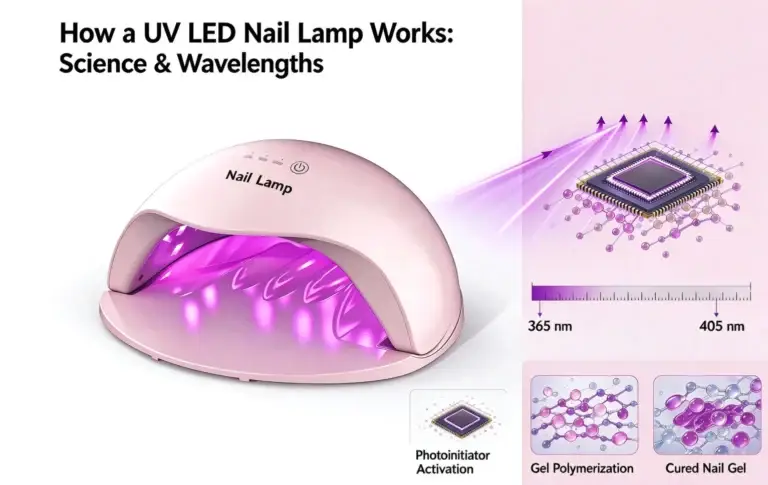
The core technology inside gel polish relies on specific chemical compounds called photoinitiators. These light-sensitive molecules remain dormant in the bottle. They activate only when they receive the correct optical energy.
The Role of Photoinitiators
When a client places their hand inside a curing device, the lamp emits photons. The photoinitiators absorb these photons and break apart to create highly reactive free radicals. These radicals immediately seek out and react with the monomers and oligomers present in the gel formula.
The Chain Reaction
This interaction initiates a rapid chain reaction. The small molecules link together into a dense, cross-linked polymer network. This rapid molecular bonding is what gives gel polish its extreme durability and hard, glossy finish.
Air Drying vs. Light Curing: What Is the Difference?
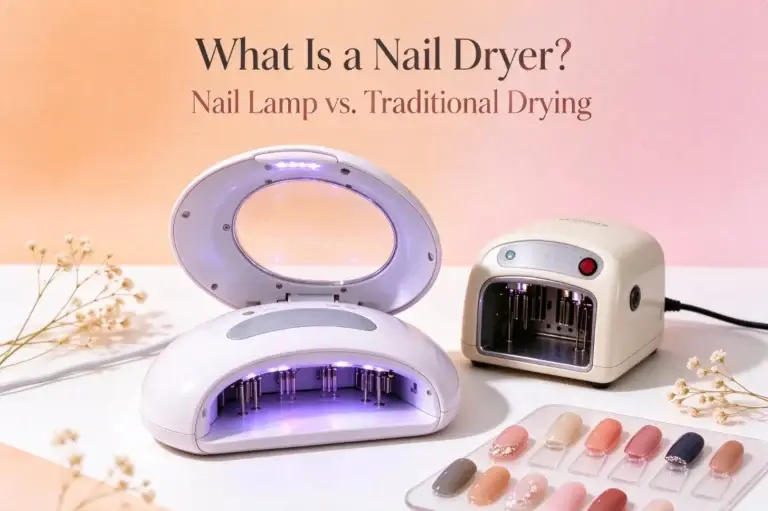
Traditional nail lacquers rely on solvent evaporation. Once exposed to air, the liquid solvents evaporate, leaving the color pigments and resin behind on the nail. This physical process is slow and often results in smudges.
Gel polishes operate on a completely different chemical principle. They do not dry in the air. Instead, they require light curing. This process uses optical energy to trigger a chemical reaction called photopolymerization. The liquid ingredients form a solid plastic structure rather than evaporating.
UV Nail Lamp vs. LED Nail Lamp: Core Differences
A common misconception is that LED devices do not emit ultraviolet light. In reality, both a UV nail lamp and an LED nail lamp emit ultraviolet energy to cure the gel. The true difference lies in the bulb technology and the emitted light spectrum.
Wavelength and Efficiency
Older UV devices use compact fluorescent lamps (CFL) that emit a broad spectrum of wavelengths, typically between 320nm and 400nm. This broad emission cures almost any gel formula but requires more time.
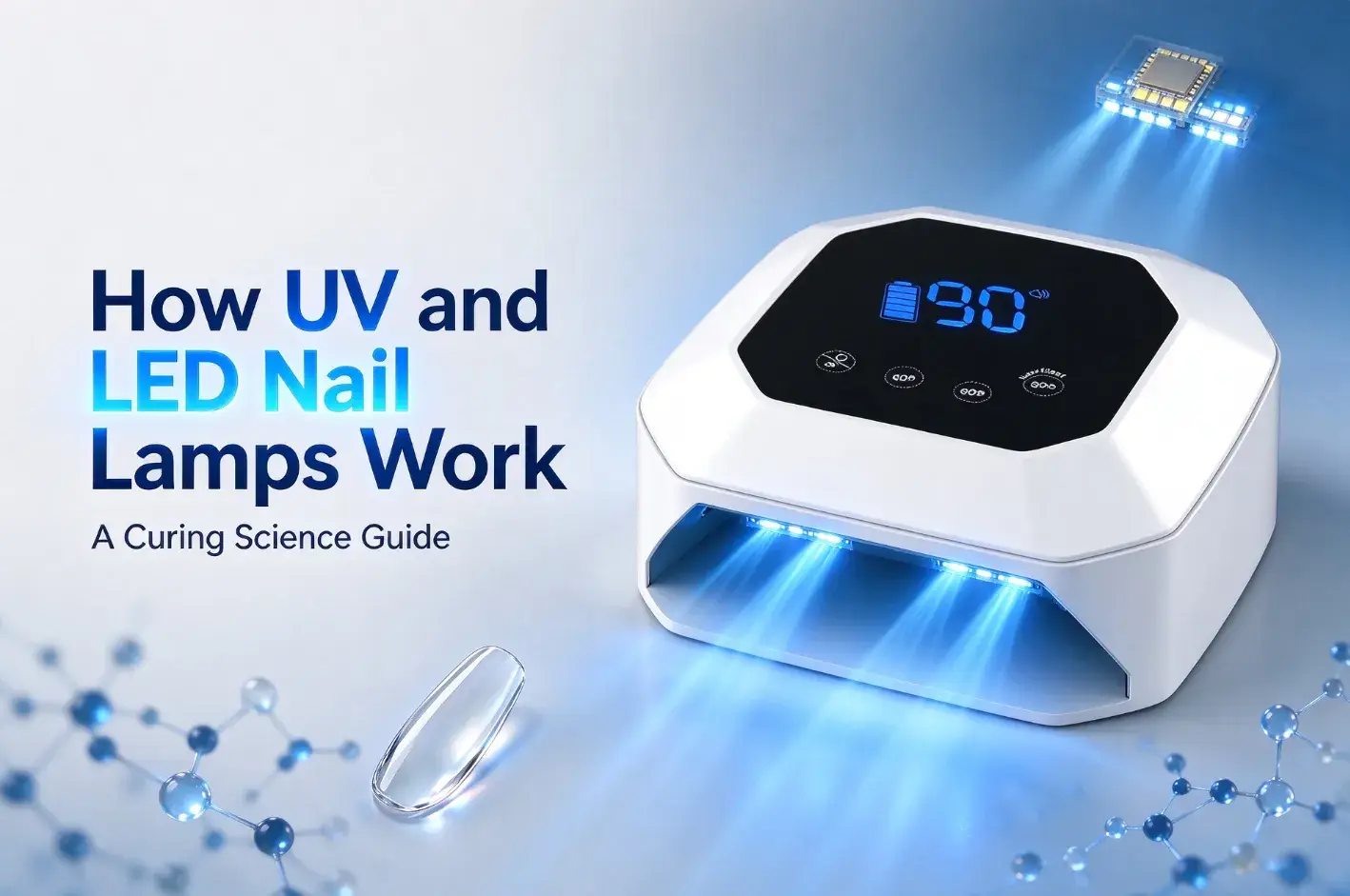
An LED nail lamp uses light-emitting diodes to produce a narrow, concentrated band of wavelengths, usually between 365nm and 405nm. This targeted energy matches modern photoinitiators perfectly, curing the formulas much faster.
Comparison of Curing Technologies
| Feature | UV Nail Lamp | LED Nail Lamp |
| Bulb Technology | Compact Fluorescent Lamps (CFL) | Light Emitting Diodes (LED) |
| Wavelength Spectrum | Broad (320nm – 400nm) | Narrow (365nm – 405nm) |
| Curing Speed | 2 to 3 minutes per layer | 30 to 60 seconds per layer |
| Bulb Lifespan | Short (requires regular replacement) | Long (lasts up to 50,000 hours) |
| Gel Compatibility | Cures nearly all gel formulas | Cures LED-specific and modern formulas |
Matching Gel Polish Formulas to Light Sources
Using the wrong lamp can lead to under-cured polish. This causes chipping and increases the risk of skin allergies, which can harm a salon’s reputation. Manufacturers design specific gel formulas to react to specific wavelengths.
-
Check the Manufacturer Guidelines: Review the product specifications to see if the formula requires a broad-spectrum or narrow-band device.
-
Identify the Photoinitiator: Formulas using TPO photoinitiators generally require the 405nm wavelength commonly found in LED units.
-
Leverage Hybrid Technology: Many modern devices feature dual optical chips. These units emit both 365nm and 405nm wavelengths, offering broad compatibility for different brands.
-
Maintain Equipment: A fading light source will fail to trigger the chemical reaction. Clean the diodes regularly and monitor curing times to ensure consistent performance.
Summary
Understanding how nail lamps work helps professionals achieve durable, flawless results. The photopolymerization process relies on the precise interaction between photoinitiators and specific wavelengths. While a UV nail lamp offers broad compatibility, an LED nail lamp provides remarkable speed and efficiency. Matching the correct light source to your gel formula ensures a complete, safe cure every time.
FAQ
-
How does an LED nail lamp cure gel polish so quickly?
An LED unit emits a highly concentrated, narrow wavelength of light. This targeted energy perfectly matches the specific photoinitiators in modern gel formulas, triggering a much faster chemical reaction than broad-spectrum devices. -
Can a UV nail lamp dry regular nail polish?
No, regular nail lacquer dries through solvent evaporation, not photopolymerization. Placing traditional polish under a curing device will not speed up the drying process. -
Are LED nail lamps safer than traditional UV ones?
Both devices emit ultraviolet light to cure the polish. However, LED devices offer much shorter exposure times. This reduced curing time minimizes overall ultraviolet light exposure during a manicure session. -
Why is my gel polish still sticky after curing?
Gel polish leaves a natural sticky layer called the inhibition layer after curing. You must wipe this layer off with isopropyl alcohol. If the gel underneath feels soft, your lamp might lack the correct wavelength or power. -
Do I need to replace the bulbs in my curing device?
Fluorescent bulbs in a UV device lose power over time and require replacement every few months. The solid-state diodes in an LED unit last for tens of thousands of hours and generally do not require changing.