How a UV LED Nail Lamp Works? Science & Wavelengths
Gel polish cannot dry through solvent evaporation like traditional lacquer. Instead, it relies on a photochemical reaction triggered by artificial ultraviolet radiation. Modern salons and beauty enthusiasts rely on solid-state diodes to complete this process within seconds.
Understanding the core mechanisms behind these devices clarifies how nail enhancements harden, why curing speed varies, and why equipment compatibility matters for long-lasting results.
What Is a UV LED Nail Lamp?
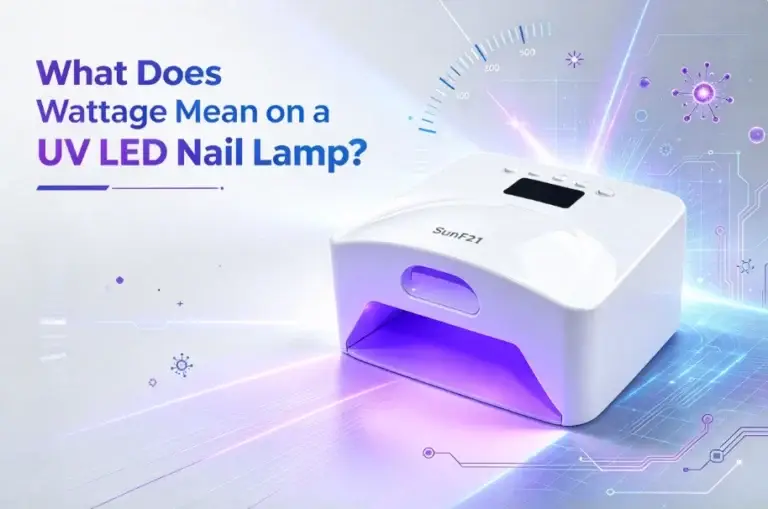
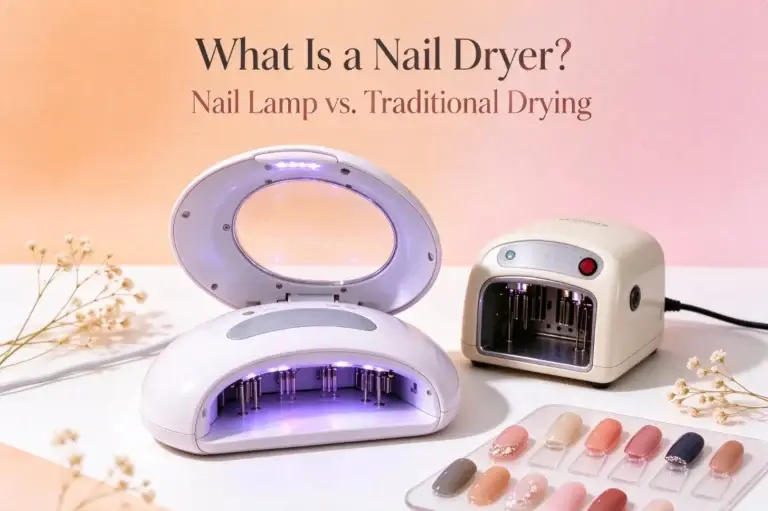
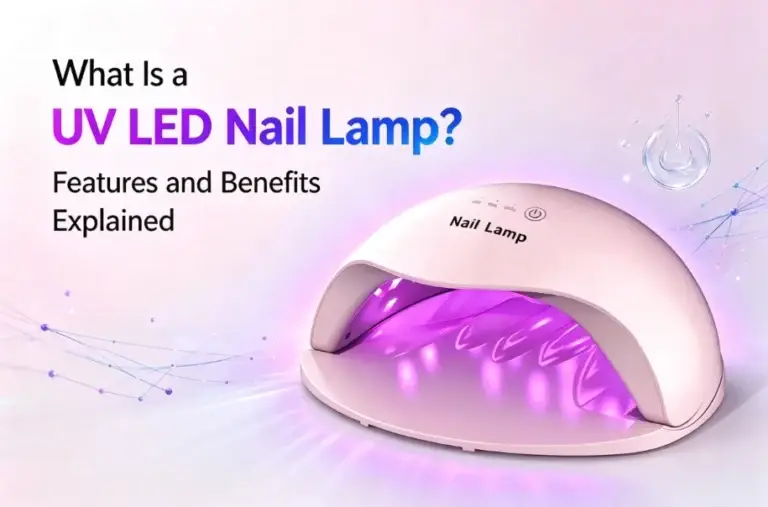
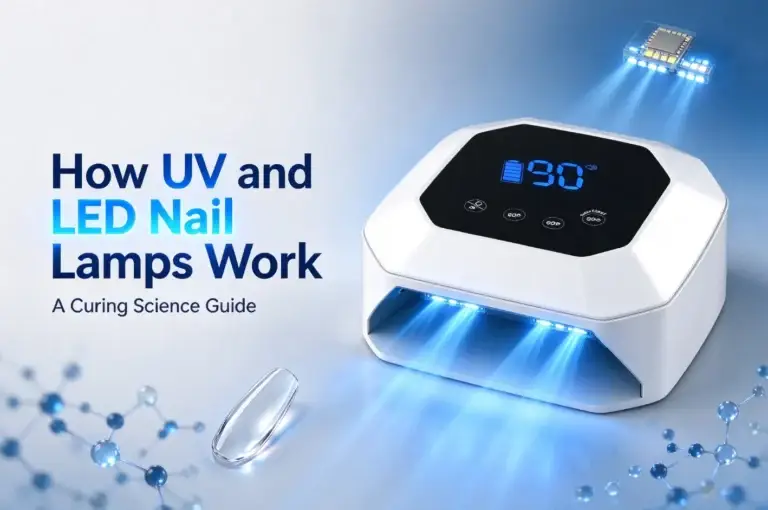
A UV LED nail lamp is an optoelectronic device that emits narrow-band ultraviolet light to cure specialized gel formulations. Unlike older ultraviolet appliances that used fluorescent bulbs, LED units use solid-state light-emitting diodes to generate radiation.
These diodes convert electrical energy directly into photons. As a result, they deliver targeted optical output while generating substantially less ambient heat. Many modern curing devices, including popular configurations like the sun uv led nail lamp series, integrate dual-light chips that emit across multiple target spectra simultaneously.
The Photopolymerization Process: How Gel Cures
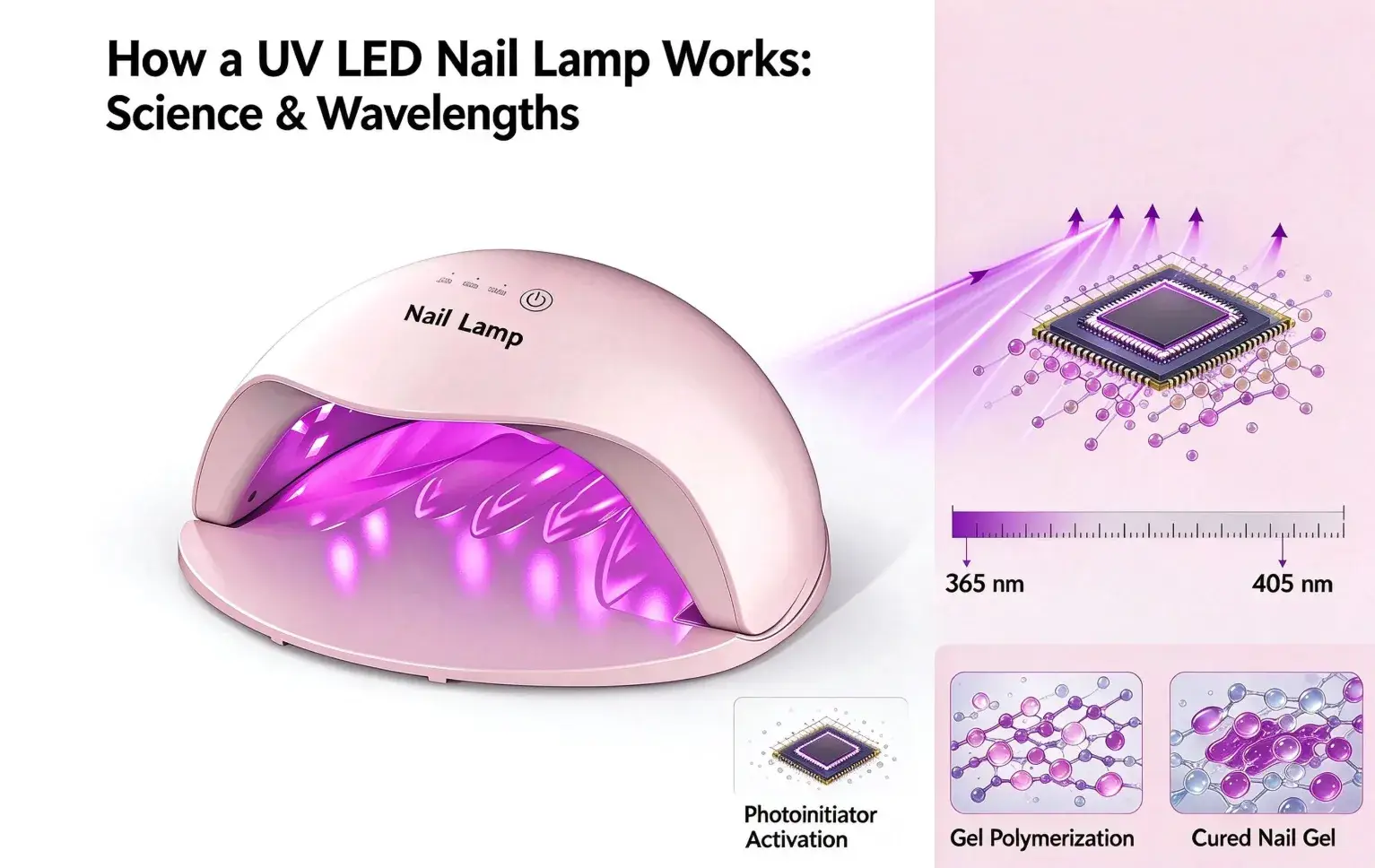
Gel polish consists of liquid monomers, short-chain oligomers, pigments, and chemical agents known as photoinitiators. When exposed to specific light frequencies, these liquid ingredients transform into a rigid, cross-linked plastic network. This chemical transformation is known as photopolymerization.
The process develops through three distinct stages:
-
Photon Absorption: Diodes deliver light energy directly into the applied gel layer.
-
Initiation: Photoinitiators inside the formula absorb these specific photons. This absorption breaks internal chemical bonds and creates active free radicals.
-
Propagation and Cross-Linking: The free radicals react with surrounding monomers and oligomers, bonding them into dense, interlocking polymer chains.
Once this chain reaction stabilizes, the liquid coating solidifies into a durable polymer film.
The Critical Role of Light Wavelengths
Ultraviolet light spans several spectral bands, but cosmetic gel curing operates almost exclusively within the UV-A spectrum, between 365 and 405 nanometers (nm).
Photoinitiators do not react to generic brightness. Each chemical compound responds only to an exact activation wavelength:
-
365 nm (Lower UV-A): This band delivers high energy that primarily activates surface curing. It helps produce high-gloss finishes and solid exterior barriers, though it penetrates deeper layers less efficiently.
-
395 nm to 405 nm (Upper UV-A / Violet Border): This longer wavelength penetrates deeper through pigmented gel coatings. It ensures that the base and middle sections of the enhancement reach proper structural hardness.
To balance surface gloss with deep cross-linking, dual-wavelength hardware combines 365 nm and 405 nm emitters within a single housing.
| Wavelength Band | Primary Penetration Level | Typical Function in Gel Curing | Common Light Source |
| 365 nm | Surface to Upper Layer | Surface hardness, stain resistance, clear top coat curing | Traditional UV tubes, specialized dual-chip LEDs |
| 395–405 nm | Deep Layer to Base | Base coat adherence, through-curing of dense color pigments | Standard high-output LED diodes |
| Dual Peak (365 + 405 nm) | Full Layer (Surface to Base) | Complete polymerization across diverse hybrid formulations | Modern dual-spectrum UV LED nail lamps |
Why Not Every Lamp Works with Every Gel
A frequent misconception in the beauty industry assumes that any lamp can cure any gel product if left on long enough. Chemical realities contradict this assumption. Curing depends on spectral matching rather than elapsed time.
Spectral Mismatch
If a gel manufacturer formulates a product with photoinitiators calibrated to 365 nm, exposing that gel to a narrow 405 nm LED source will leave the photoinitiators unreacted. The polish may feel dry on top due to slight surface exposure, yet remain soft and uncured underneath.
Power Density vs. Wattage
Wattage ratings indicate total electrical power consumption rather than usable ultraviolet output. A 48W unit does not automatically deliver twice the curing performance of a 24W unit. Curing efficacy depends on optical irradiance—the actual concentration of target photons delivered per square centimeter of nail surface.
Risks of Incomplete Curing
Using an incompatible curing device leads to under-curing, which introduces noticeable practical and health issues:
-
Premature service breakdown, chipping, and complete layer lifting.
-
Dull finishes caused by unreacted monomers remaining near the surface.
-
Increased risk of contact dermatitis from prolonged skin exposure to free, uncured acrylates.
Key Hardware Factors That Affect Performance
Diodes represent the core technology, but several supporting design elements influence the overall curing outcome:
-
Diode Distribution: Lamps with evenly spaced LEDs eliminate internal dead zones, ensuring the thumb receives equal energy alongside other fingers.
-
Interior Reflectivity: Mirrored or polished metallic baseplates bounce stray photons back toward the sides of the nail plate.
-
Thermal Regulation: Overheating degrades diode efficiency over time. Effective heat dissipation preserves steady light intensity across consecutive salon services.
Summary
A UV LED nail lamp is a precise photochemical instrument rather than a basic drying fan. The diodes release targeted UV-A photons that activate photoinitiators, converting liquid resins into cross-linked polymers. Because different formulas require specific wavelengths between 365 nm and 405 nm, matching your lamp’s spectral output to your gel system remains essential for safe, durable enhancements.
FAQ
1. Does a UV LED nail lamp dry regular nail polish?
No, a UV LED lamp cannot dry regular nail polish. Traditional formulas dry through solvent evaporation into the surrounding air, whereas gel polishes require UV-A photons to trigger chemical cross-linking.
2. Can higher wattage compensate for the wrong wavelength?
Higher wattage cannot compensate for an incorrect wavelength band. If the lamp fails to emit the specific nanometer range required by the gel’s photoinitiators, the chemical reaction will not trigger regardless of power levels.
3. What is the difference between traditional UV lamps and UV LED lamps?
Traditional lamps utilize compact fluorescent bulbs that emit a broad spectrum between 320 nm and 400 nm, while UV LED lamps utilize solid-state diodes that project narrow bands (usually 365 nm or 395–405 nm) with higher energy efficiency and faster cure times.
4. Why does gel polish feel warm during curing inside the lamp?
The warmth occurs because photopolymerization is an exothermic reaction that naturally releases heat as chemical bonds form. Rapid bond formation in high-intensity lamps concentrates this thermal release into a few seconds.
5. What are the signs of an under-cured gel manicure?
Common signs include wrinkling coats, pocketing, sudden lifting, service softness, and sticky residues underneath the top layer after wiping.
Reference Sources
-
U.S. Food and Drug Administration (FDA): How to Safely Use Nail Curing Lamps
-
Cosmetic Ingredient Review (CIR): Safety Assessment of Acrylates and Methacrylates in Cosmetics
-
Journal of Photochemistry and Photobiology: Photopolymerization Kinetics of Dental and Cosmetic Diacrylate Resins
-
British Association of Dermatologists (BAD): Artificial Nails and Acrylate Allergy Awareness Guidelines